

Every San Diegan knows the look: an orange-tinged sky, ash on the patio furniture, and that campfire smell that means a wildfire is burning somewhere in the county — or drifting down from one burning hundreds of miles away. Late summer and fall are peak fire season in Southern California, and while you can’t control the smoke outside, you have more control than you might think over the air inside your home.
Key Takeaways
- Wildfire smoke is a fine-particle problem. The dangerous particles (PM2.5) are small enough to slip through cheap filters and deep into your lungs.
- Your HVAC system can help or hurt depending on the filter installed and whether your ducts are sealed.
- Upgrade the filter before fire season, not during it — and know your system’s limits on filter thickness.
- Leaky ducts pull smoky attic air into your home — sealing them improves air quality year-round.
Why Smoke Gets Inside in the First Place
Homes aren’t airtight — and on a smoky day, every gap is a doorway. Smoke particles ride in through open windows and doors, obviously, but also through attic bypasses, recessed lights, plumbing penetrations, and — critically — leaky return ducts that suck unfiltered attic or crawlspace air straight into your system and distribute it to every room.
The particles that matter most are what the EPA calls PM2.5 — particles 2.5 microns and smaller. They’re invisible individually, they stay airborne for hours, and they’re the reason smoky days are linked to headaches, scratchy throats, and trouble for anyone with asthma or heart conditions.
Your Smoke-Day Game Plan
1. Close Up and Run the System
When the air quality index climbs, close windows and doors and run your HVAC fan so air keeps cycling through the filter. Central air with a good filter actively cleans your indoor air — but only when air is moving through it.
2. Upgrade Your Filter — Within Your System’s Limits
The standard fiberglass filter that came with your system catches dust bunnies, not smoke. Filters rated MERV 11–13 capture a meaningful share of fine smoke particles and are the EPA’s general recommendation for wildfire-prone areas. One caution: denser filters restrict airflow, and not every blower is built for them. If you’re unsure what your system can handle, ask during your next AC maintenance visit — the wrong filter can strain the system it’s supposed to protect.
3. Consider Whole-Home Air Cleaning
Portable room purifiers help the room they’re in. A whole-home solution — high-efficiency filtration or air purification installed at the system itself — treats every room at once, runs quietly out of sight, and works against everyday pollutants (pollen, pet dander, dust) the other 350 days a year. ASI’s indoor air quality team can match a system to your home and your sensitivities.
ASI Pro Tip: After any major smoke event, replace your filter even if it isn’t due. A filter loaded with smoke particles keeps releasing odor into your airstream — that lingering campfire smell weeks after the fire is often the filter itself.
The Hidden Player: Your Ductwork
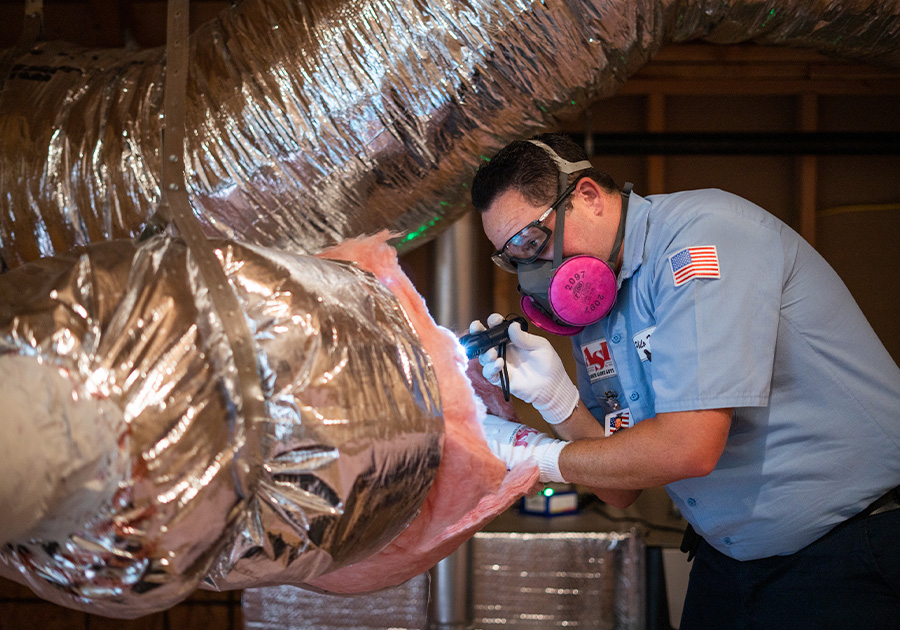
Here’s the part most homeowners miss. If your return ducts leak, your system pulls air from the attic or crawlspace — the dustiest, smokiest air around your home — and pushes it through every vent. During fire season that means you’re importing smoke; the rest of the year it means dust, insulation fibers, and hot attic air that drives up cooling bills.
Signs your ducts deserve a look:
- Dust reappears within a day or two of cleaning, especially around supply vents.
- Smoke smell indoors even with windows shut.
- Uneven cooling or weak airflow in certain rooms.
- An older home that’s never had its ducts inspected or sealed.
Professional duct repair and sealing closes those leaks, and pairing it with proper attic insulation gives your home a real envelope — cleaner air in fire season, lower bills all year.
After the Smoke Clears
When the air quality index drops back into the green, reverse the playbook: open the house up and flush it with fresh air, especially in the evening when San Diego’s onshore breeze does the work for you. Wipe down horizontal surfaces where particles settled, vacuum with a HEPA-equipped machine if you have one, and swap the loaded filter for a fresh one.
If your system ran hard through an extended smoke event — or you can still smell smoke when the AC kicks on — it’s worth having the indoor coil and blower compartment looked at. Smoke residue is sticky, and it clings to the same surfaces that condensation keeps damp, which is a recipe for lingering odors a filter change alone won’t fix.
Build the Plan Before You Smell Smoke
The worst time to think about indoor air quality is when the sky is already orange and every store in the county is sold out of filters. A little preparation in late summer — the right filter on the shelf, ducts sealed, a whole-home purifier if your household needs one — means the next smoke advisory is an inconvenience instead of a health event.
Breathe Easier This Fire Season
From filter advice to whole-home air purification and duct sealing, The White Glove Guys can smoke-proof your indoor air. Call (858) 266-0456 to talk through your options.
Want Healthier Indoor Air?
ASI improves San Diego homes with insulation and energy solutions that make your air cleaner and your home more comfortable.
