
Fill a glass from the tap almost anywhere in San Diego County and you’re drinking some of the hardest water in the country. Most of our supply travels hundreds of miles from the Colorado River, picking up dissolved calcium and magnesium the whole way. It’s perfectly safe to drink — but your pipes, fixtures, and water heater would tell a different story if they could talk.
Key Takeaways
- San Diego’s water is very hard — mineral-heavy water imported largely from the Colorado River.
- Scale builds up silently inside water heaters, pipes, and fixtures long before you see white crust on a faucet.
- Water heaters take the worst of it, losing efficiency and years of lifespan to sediment buildup.
- A free in-home water test from ASI tells you exactly what’s in your water and what (if anything) to do about it.
What “Hard” Water Actually Means
Water hardness is a measure of dissolved minerals — mostly calcium and magnesium. The minerals themselves aren’t harmful to people. The problem is what happens when hard water is heated or evaporates: the minerals come out of solution and stick to whatever surface is nearby. That’s the white crust on your showerhead, the film on your shower glass, and the spots on your dishes.
What you can see is the smallest part of the problem. The same scale forms everywhere your water touches — inside supply lines, inside valves, inside appliances — where you can’t see it and can’t clean it.
Where Hard Water Does Its Damage
Your Water Heater
Heat accelerates scale formation, which makes the water heater ground zero. In a tank-style heater, minerals settle into a layer of sediment on the bottom of the tank. That layer insulates the water from the burner, so the heater runs longer to do the same job — and the popping or rumbling sound many San Diego homeowners hear is water boiling up through that sediment. Regular water heater maintenance, including flushing the tank, fights this. Left alone, sediment shortens the tank’s life and can lead to an early water heater replacement.
Fixtures and Faucets
Scale clogs aerators, stiffens shutoff valves, and eats away at the finish on faucets and showerheads. If your shower pressure has slowly faded over the years, mineral buildup in the showerhead and supply lines is a common culprit.
Appliances, Skin, and Laundry
Dishwashers and washing machines wear out faster when scale coats their heating elements. Hard water also reacts with soap to form residue instead of lather — which is why soft-water visitors notice their skin feels different here, and why towels washed in hard water come out stiff and scratchy.
ASI Pro Tip: Want a quick read on your own water? Look at the base of a faucet you haven’t cleaned in a month. A ring of white, chalky buildup means scale is forming at the same rate inside your water heater — where you can’t wipe it off with vinegar.
A Special Warning for Tankless Owners
Tankless water heaters are a fantastic upgrade — endless hot water, smaller footprint, longer potential lifespan. But they’re also more sensitive to hard water than tank models. Scale builds up inside the narrow passages of the heat exchanger, where even a thin layer cuts efficiency and can trigger error codes or shutdowns. Manufacturers know it, too: many require periodic descaling to keep the warranty intact. In water as hard as San Diego’s, a tankless unit without water treatment is fighting with one hand tied behind its back.
What You Can Do About It
You can’t change what comes out of the municipal supply, but you can change what flows through your home:
- Water softener: Removes calcium and magnesium before they reach your plumbing — the only true fix for scale at the source.
- Whole-home filtration: Pairs well with softening to improve taste and remove chlorine and other contaminants.
- Regular water heater flushes: Removes sediment before it hardens into a permanent layer.
- Pressure and fixture checks: A plumbing inspection catches scale-related restrictions and failing valves early.
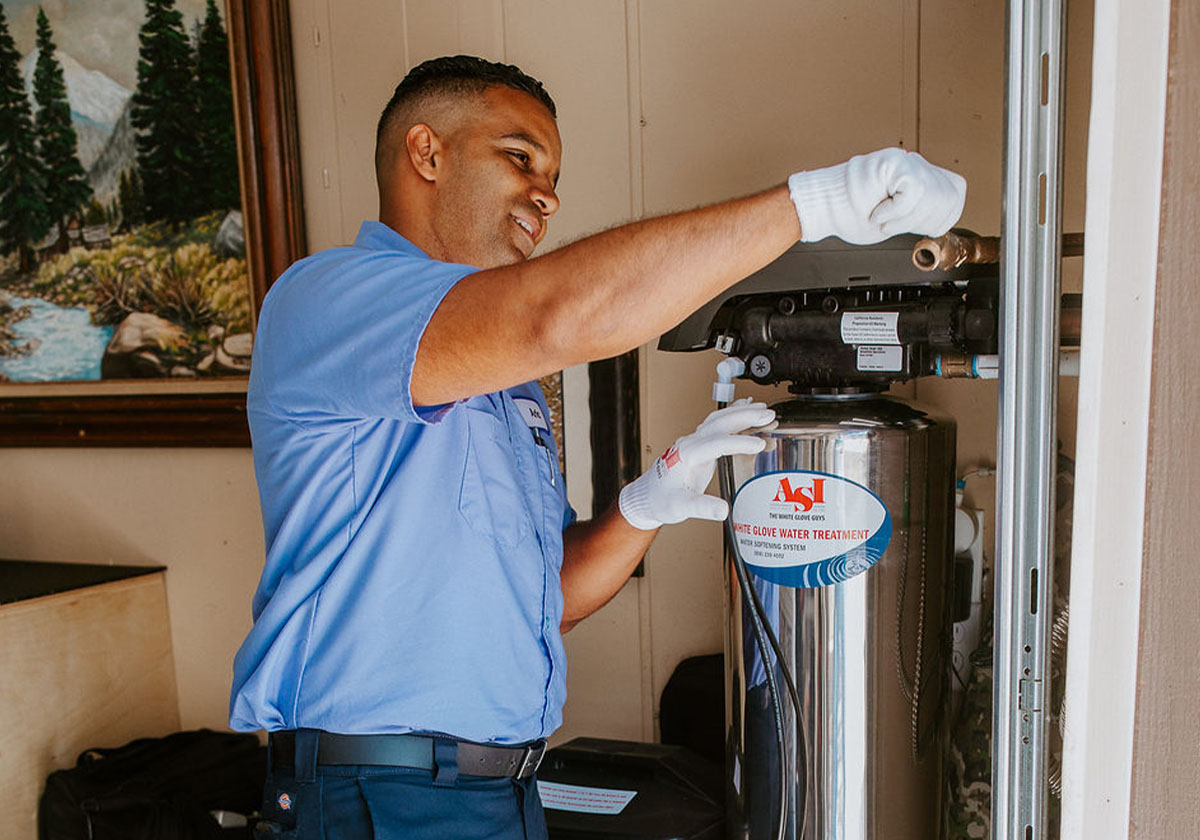
Every home’s water — and budget — is different, which is why ASI’s water treatment team starts with a free in-home water test and estimate. A specialist tests what’s actually coming out of your tap, recommends a right-sized system, and gives you clear, upfront pricing with no obligation. And if you’re already planning a tankless water heater upgrade, ask about pairing it with a water softener — ASI currently offers 50% off a softener (up to $2,400 off) with a tankless purchase, which protects the new unit from the scale that would otherwise shorten its life.
The Bottom Line for San Diego Homeowners
Hard water isn’t an emergency — it’s a slow tax on everything water touches in your home. The good news is it’s completely manageable once you know what you’re dealing with. Test first, then decide. If a plumbing repair is already overdue because of scale damage, it’s better to know now than after the leak.
Find Out What’s in Your Water — Free
Schedule a free in-home water test and estimate with The White Glove Guys. Call (858) 266-0456 — no purchase necessary, no pressure, just answers.
Got a Plumbing Problem?
From repairs to installs to emergencies, The White Glove Guys fix it right — with upfront pricing and no extra charge for nights or weekends.