

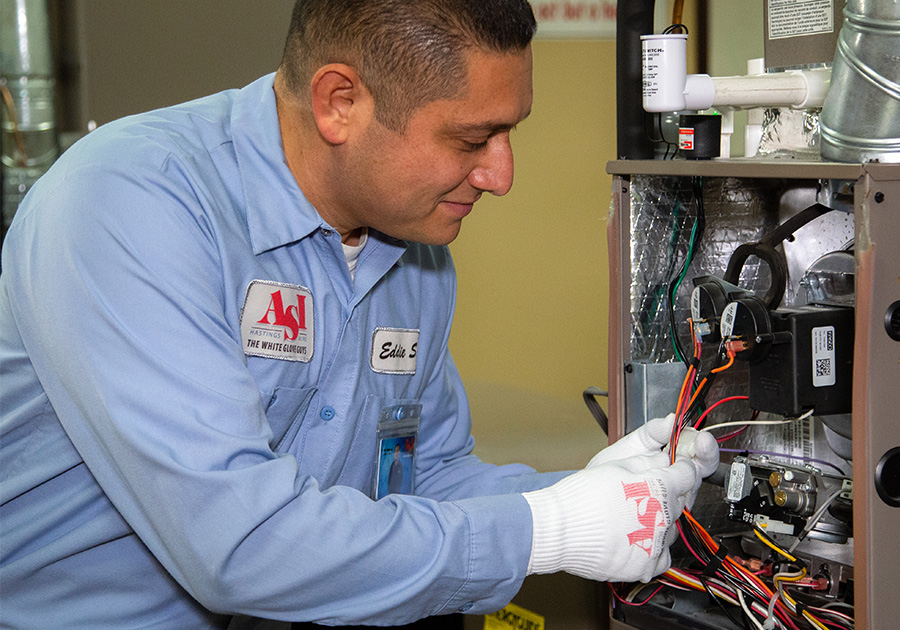
It happens every October in San Diego: the first genuinely chilly evening arrives, you flip the thermostat to heat for the first time since spring, and the house fills with a smell somewhere between burnt toast and hot dust — maybe with a clunk or squeal from the closet for good measure. Some of that is completely normal. Some of it is your furnace asking for help. Here’s how to tell the difference.
Key Takeaways
- A brief dusty smell at first startup is normal — it should fade within an hour or so.
- Electrical, metallic, or rotten-egg smells are never normal. The last one means turn off the system, leave, and call your gas utility.
- New or worsening noises — squealing, grinding, booming — are early mechanical warnings worth a professional look.
- A fall safety check catches problems — including cracked heat exchangers — before you’re relying on the furnace nightly.
The Smells: Normal vs. Call Someone
Normal: Burning Dust
All summer, a fine layer of dust settled on your furnace’s heat exchanger and burners. The first time the system fires, that dust burns off — producing the classic “first heat of the year” smell. It should be mild, spread evenly through the house, and disappear within the first hour of operation. Starting the season with a fresh air filter helps it pass faster.
Not Normal: Plastic, Electrical, or Metallic Smells
A sharp, acrid odor — like burning wiring or hot metal — points to an electrical component or motor overheating. Turn the system off at the thermostat and schedule a furnace repair visit before running it again. Electrical faults don’t heal on their own, and they’re a fire risk if ignored.
Emergency: Rotten Eggs
Natural gas is odorized with a sulfur smell precisely so you’ll notice it. If you smell rotten eggs near the furnace or anywhere in the house, don’t troubleshoot: shut the system off if it’s safe to do so, get everyone outside, and call SDG&E’s gas emergency line from outside the home. Gas leaks are the one furnace problem where waiting is not an option.
The Noises: What Your Furnace Is Telling You
- Squealing or screeching: Usually a blower motor bearing or belt problem — inexpensive if caught early, a seized motor if not.
- Grinding metal: Shut it down. Something is making contact that shouldn’t be, and continued running multiplies the damage.
- A boom or whump at startup: Often delayed ignition — gas building up before it lights. This stresses the heat exchanger and deserves prompt attention.
- Rapid clicking that never becomes heat: An igniter or flame-sensor issue; the furnace is trying and failing to light.
- Pops and ticks from the vents: Usually just metal ductwork expanding as it warms — harmless, if a little dramatic.
ASI Pro Tip: Don’t judge your furnace by night one. Run the heat for 20–30 minutes on a mild afternoon in early October, while it’s still easy to open windows and there’s no urgency. You’ll burn off the summer dust, confirm everything works, and have time to schedule a repair on your terms instead of during the first cold snap.
Why San Diego Furnaces Are Prone to First-Heat Surprises
Our furnaces live an unusual life. In colder climates, heating equipment runs near-daily for half the year, so problems surface gradually and get noticed. In San Diego, a furnace might sit untouched for seven or eight months, then get asked to perform on demand. Long idle periods let dust accumulate on burners, moisture work on metal components — especially near the coast — and small issues hide until the exact moment you need heat.
The same mild climate also means San Diego furnaces tend to stay in service longer than the national norm; a system that only runs a few hundred hours a year can soldier on well past the age where it would have been replaced in Minnesota. That’s good economics, but it makes the annual safety inspection more important, not less — age-related cracks and corrosion don’t care how few hours the unit ran last winter.
The Check You Can’t Do Yourself
Smells and sounds are useful warnings, but the most serious furnace problem — a cracked heat exchanger — often produces neither. The heat exchanger is the metal barrier that keeps combustion gases, including carbon monoxide, separate from the air blowing into your rooms. Cracks develop slowly with age and heat cycling, and finding them requires a trained technician with proper instruments.
That inspection is the heart of a professional furnace maintenance visit, along with burner cleaning, safety-control testing, and a combustion check. While you’re at it, make sure you have working carbon monoxide detectors on every level of your home — they’re required in California for good reason. If your furnace is past 15–20 years old and repairs are stacking up, it’s also worth an honest conversation about furnace replacement — newer equipment is meaningfully more efficient, and financing can make the timing workable.
If a Repair Is in Your Future
Catch something on that first test run? You’re in a better spot than you think — October repairs beat December emergencies every time. ASI backs heating repairs with upfront, flat-rate pricing and the White Glove guarantee, and current specials include $100 off any furnace repair of $500 or more. Members of ASI Rewards get their seasonal maintenance handled automatically, so the first cold night is a non-event.
Hearing or Smelling Something Off?
Get it checked before the cold arrives. Call The White Glove Guys at (858) 266-0456 — serving all of San Diego County since 1952.
Heating Not Keeping Up?
From furnace repair to replacement, ASI keeps your home warm and safe — with no extra charge for nights or weekends.
