

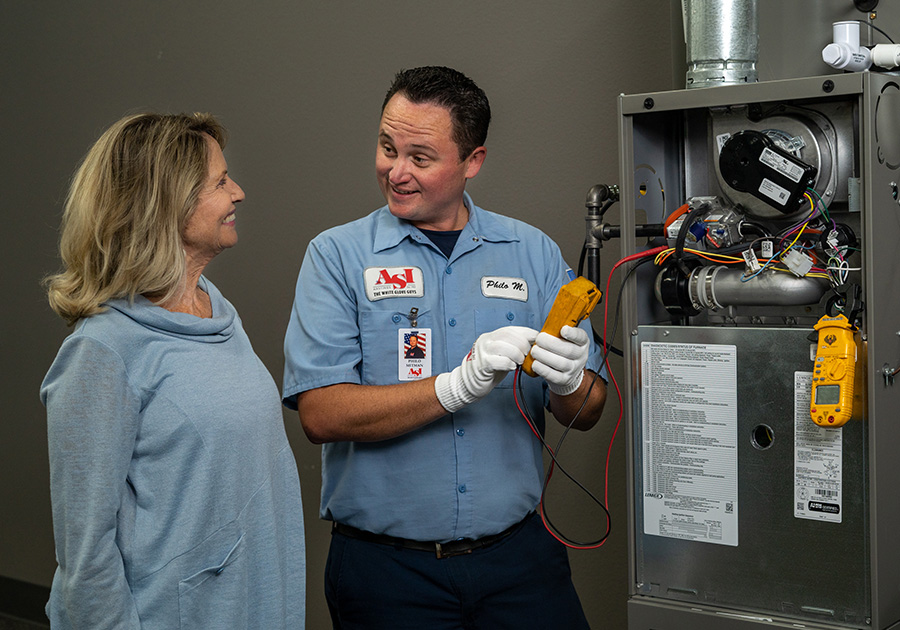
The holidays are approaching, family is on the way, and you’ve just noticed something frustrating: some rooms in your home are toasty warm while others feel like walk-in refrigerators. If you’re dealing with uneven heating right before guests arrive, don’t panic—many heat distribution problems have surprisingly simple fixes you can address before the doorbell rings.
Why Heat Distribution Problems Strike at the Worst Time
After 70 years of keeping San Diego homes comfortable, ASI The White Glove Guys have noticed a predictable pattern: furnace problems seem to appear right when you need your heating system most—when guests are coming.
Here’s the truth: Your furnace has likely been struggling for weeks or months. The increased demand of heating a full house simply reveals issues that were already developing. The good news? Many heat distribution problems have quick fixes that can dramatically improve comfort before your guests arrive.
Understanding How Heat Moves Through Your Home
Your furnace doesn’t just create heat—it relies on an entire system to distribute warm air evenly throughout your home:
The Blower Motor: This fan pushes heated air through your ductwork. If it’s struggling, some rooms won’t get adequate airflow.
Your Duct System: These hidden pathways carry warm air to every room. Leaks, blockages, or poor design can create hot and cold zones.
Supply and Return Vents: Proper airflow requires balance. Blocked or closed vents disrupt the entire system’s efficiency.
Air Filter: A clogged filter restricts airflow, forcing your furnace to work harder while delivering less heat to distant rooms.
Warning Signs That Need Professional Attention
- No Heat at All: If your furnace isn’t producing any heat, skip the DIY fixes and call for professional furnace repair
- Strange Smells: Burning odors, rotten egg smell, or metallic scents indicate potentially dangerous issues
- Yellow Pilot Light: A yellow or flickering flame instead of steady blue may indicate carbon monoxide risk
- Loud Banging or Screeching: Unusual noises often signal mechanical failures that require expert diagnosis
- Frequent Cycling: If your furnace turns on and off every few minutes, there’s a deeper problem
Quick Fixes You Can Do Before Guests Arrive
These simple adjustments can dramatically improve heat distribution—often in just minutes.
Replace Your Air Filter
A dirty filter is the #1 cause of poor heat distribution. Check yours now—if you can’t see light through it, replace it immediately. This single fix can improve airflow by 15-20%.
Open All Vents Fully
Walk through every room and ensure all supply vents are open. Closing vents doesn’t save energy—it creates pressure imbalances that make the whole system less efficient.
Clear Vent Obstructions
Move furniture, rugs, and curtains away from vents. A couch covering a vent can make an entire room cold while the warm air gets trapped underneath.
Check Return Air Vents
Return vents pull air back to the furnace. If these are blocked, your system starves for air. Make sure nothing is covering these larger vents, typically located in hallways or central areas.
Adjust Thermostat Settings
Set the fan to “ON” instead of “AUTO” to continuously circulate air. This helps mix warm and cool air throughout your home, reducing hot and cold spots significantly.
Use Natural Heat Wisely
Open curtains on south-facing windows during the day to capture solar heat. Close them at night to insulate. This simple trick can raise room temperatures 2-5 degrees naturally.
Pro Tips for Guest Room Comfort
Guest rooms are often the coldest rooms in the house because they’re typically located far from the furnace and kept closed. Here’s how to warm them up quickly:
The Day Before Guests Arrive
- ✓ Open the guest room door to let it join the home’s airflow
- ✓ Verify the room’s supply vent is fully open and unobstructed
- ✓ Run a portable fan to help circulate warm air into the room
- ✓ Check for drafts around windows and apply temporary weather stripping
- ✓ Add an extra blanket to the bed as a backup comfort measure
Quick Comfort Boosters
- ✓ Place a rug on cold floors—bare floors feel 5-10 degrees colder
- ✓ Use a space heater for supplemental warmth (safely away from bedding)
- ✓ Reverse ceiling fan direction to clockwise at low speed to push warm air down
- ✓ Close the fireplace damper if not in use to prevent heat loss
- ✓ Consider a heated mattress pad for extra cozy sleeping
Why Some Rooms Are Always Colder
If certain rooms in your home are consistently colder than others, there’s usually a reason:
Distance from the furnace: Rooms farthest from the furnace receive air that has traveled longer through ductwork, losing heat along the way.
Duct leaks: The average home loses 20-30% of heated air through duct leaks before it ever reaches the vents.
Poor insulation: Rooms over garages, on corners of the house, or with large windows lose heat faster than they receive it.
Undersized ductwork: Some rooms simply don’t have adequate duct sizing to deliver enough warm air.
These issues require professional solutions, but understanding them helps you compensate in the short term.
When Quick Fixes Aren't Enough: Our Heating System Evaluation
If your quick fixes don’t solve the problem—or if you want to prevent future issues—The White Glove Guys can perform a comprehensive heating evaluation:
Furnace Performance Check
- ✓ Test furnace output temperature and efficiency
- ✓ Inspect heat exchanger for cracks or damage
- ✓ Check blower motor operation and airflow
- ✓ Verify thermostat calibration and function
- ✓ Test safety controls and limit switches
- ✓ Inspect gas connections and burner operation
- ✓ Check carbon monoxide levels for safety
- ✓ Evaluate overall system condition and age
Distribution System Analysis
- ✓ Measure airflow at each supply vent
- ✓ Test for duct leaks using specialized equipment
- ✓ Inspect accessible ductwork for damage
- ✓ Check duct insulation condition
- ✓ Evaluate system balance room by room
- ✓ Inspect return air pathways
- ✓ Test static pressure in the system
- ✓ Provide detailed findings and recommendations
Long-Term Solutions for Even Heat Distribution
Once the holidays pass, consider these permanent improvements to eliminate uneven heating for good:
Duct Sealing and Insulation
Professional duct sealing can recover that 20-30% of lost heated air, delivering more warmth to every room. Combined with proper duct insulation, this improvement often pays for itself in energy savings within two to three years.
Zoning Systems
A zoning system uses motorized dampers to direct heat where it’s needed most. You can keep bedrooms cooler during the day and warmer at night—or boost heat to a cold guest room without overheating the rest of the house.
Furnace Upgrade or Replacement
If your furnace is over 15-20 years old, it may simply lack the capacity or efficiency to heat your home evenly. Modern high-efficiency furnaces with variable-speed blowers maintain consistent temperatures throughout your home while using significantly less energy.
Ductwork Modification
Sometimes the original ductwork design simply wasn’t adequate. Adding supply runs to problem rooms, increasing duct sizes, or balancing the system with dampers can permanently solve hot and cold spot issues.
Supplemental Heating Options
For chronically cold rooms, adding a mini-split heat pump or radiant floor heating provides targeted warmth without overtaxing your main system. These solutions work especially well for room additions, converted garages, or spaces over unconditioned areas.
Benefits of Proper Heat Distribution
Guest Comfort
Make every guest feel welcome with consistent warmth throughout your home. No more apologizing for cold bedrooms or drafty living areas.
Lower Energy Bills
When heat goes where it’s needed, you stop paying to overheat some rooms just to warm others. Efficient distribution means real savings.
Furnace Longevity
A balanced system reduces strain on your furnace. Less strain means fewer repairs and a longer equipment lifespan.
Better Sleep
Consistent temperatures throughout the night lead to better sleep for you and your guests. No more waking up too hot or too cold.
Protect Your Home
Even heating prevents cold spots where moisture can condense, reducing the risk of mold growth and protecting your home’s structure.
Peace of Mind
Know that your heating system is working efficiently and reliably. Host with confidence, regardless of outdoor temperatures.
Why San Diego Homeowners Trust ASI The White Glove Guys
For over 70 years, we’ve been keeping San Diego homes comfortable through every season. When heating problems threaten your holiday gathering, you need a team that combines deep expertise with honest, respectful service.
The ASI Difference:
- Expert Diagnosis: We find the real cause of uneven heating—not just symptoms—using professional testing equipment and decades of experience.
- Honest Recommendations: If a $20 filter change will solve your problem, that’s what we’ll recommend. We never oversell.
- Skilled Technicians: Our team receives continuous training on all heating system types, from classic furnaces to modern heat pumps.
- Upfront Pricing: You’ll know exactly what any repair or improvement will cost before we begin—no surprises, no hidden fees.
- White Glove Service: We protect your home with shoe covers and drop cloths, and we clean up completely when we’re done.
- San Diego Expertise: 70+ years serving local homeowners means we understand San Diego’s unique heating challenges.
- Quality Parts: We install professional-grade components that last, backed by solid warranties.
- Guaranteed Satisfaction: We stand behind our work with comprehensive warranties and a commitment to your complete satisfaction.
Don't Wait Until Guests Are at the Door
If your quick fixes don’t improve comfort, schedule service now—not the day before your gathering. Our schedule fills up quickly during the holiday season, and addressing issues early gives you options:
- Time to order any needed parts
- Flexibility to schedule at your convenience
- Opportunity to consider upgrades if recommended
- Peace of mind well before guests arrive
- Avoidance of premium charges for urgent scheduling
A proactive service call now is far better than a stressful repair request when you’re preparing the guest room.
Frequently Asked Questions
Why is my guest bedroom always the coldest room?
Guest bedrooms are typically at the end of duct runs (farthest from the furnace), kept closed most of the time, and often located in corners of the house with more exterior wall exposure. This combination means they receive less heated air and lose heat faster. Opening the door, ensuring vents are clear, and running the fan continuously can help significantly.
Should I close vents in unused rooms to save energy?
No—this is a common myth that actually makes heating problems worse. Modern HVAC systems are designed to work with all vents open. Closing vents increases pressure in the duct system, can cause leaks, and makes your furnace work harder. Keep all vents open for the best efficiency and comfort.
How often should I change my furnace filter?
For standard 1-inch filters, check monthly and replace every 1-3 months. Homes with pets, allergies, or dusty conditions need more frequent changes. Thicker media filters (4-5 inches) typically last 6-12 months. A dirty filter is the most common cause of poor heat distribution and furnace problems.
Will running my fan continuously increase my energy bill significantly?
A standard blower motor uses about the same energy as a 100-watt light bulb when running continuously. If you have a newer furnace with an ECM (variable-speed) motor, the cost is even lower. The improved comfort and air quality from continuous circulation usually outweighs the modest increase in electricity use.
What temperature should I set my thermostat when guests are visiting?
Most people are comfortable at 68-72°F during the day. For sleeping, 65-68°F is generally ideal. With guests, you may want to set it slightly higher (70-72°F) since you can’t know everyone’s preference. Providing extra blankets in guest rooms lets visitors adjust their personal comfort.
How do I know if my ductwork is leaking?
Signs of duct leaks include: rooms that are consistently harder to heat or cool, visible dust around vents, higher-than-expected energy bills, and whistling sounds from the duct system. Professional duct testing can measure exactly how much air you’re losing and where the leaks are located.
Can I use space heaters to supplement my furnace?
Yes, space heaters can be effective for boosting heat in specific rooms. Choose models with tip-over protection and automatic shut-off features. Never leave space heaters unattended, keep them away from bedding and curtains, and don’t use extension cords. Modern ceramic heaters are safer and more efficient than older models.
Ready to Warm Up Your Whole Home?
Whether you need a quick fix before the holidays or a long-term solution for uneven heating, ASI, The White Glove Guys are here to help. Schedule your heating evaluation today and ensure every room—and every guest—stays comfortable.
Serving San Diego County since 1952 • A+ BBB Rating • Convenient Scheduling Available
Need Professional HVAC or Plumbing Help?
Our expert technicians are ready to assist you with any heating, cooling, or plumbing needs.
